
A chipboard screw may look like an ordinary fastener, but its performance depends heavily on one critical feature: thread geometry.
Chipboard, particleboard, MDF, and similar engineered wood products have a different internal structure from solid timber. They are made from wood particles or fibres bonded together, which means a screw needs to interact with the material differently.
This is why chipboard screws are specifically designed with thread profiles suited to engineered wood applications.
What Makes Chipboard Different?
Unlike solid wood, chipboard consists of compressed wood particles bonded with resin.
When a screw enters the material, its threads need to create sufficient mechanical engagement without unnecessarily damaging the surrounding material.
A poorly matched screw can result in:
- Difficult installation
- Reduced holding performance
- Material splitting or damage
- Screw spinning without adequate grip
- Poor pull-out resistance
- Inconsistent fastening
The screw’s geometry therefore becomes an important part of the fastening system.
1. Deep Threads Help Create Strong Engagement
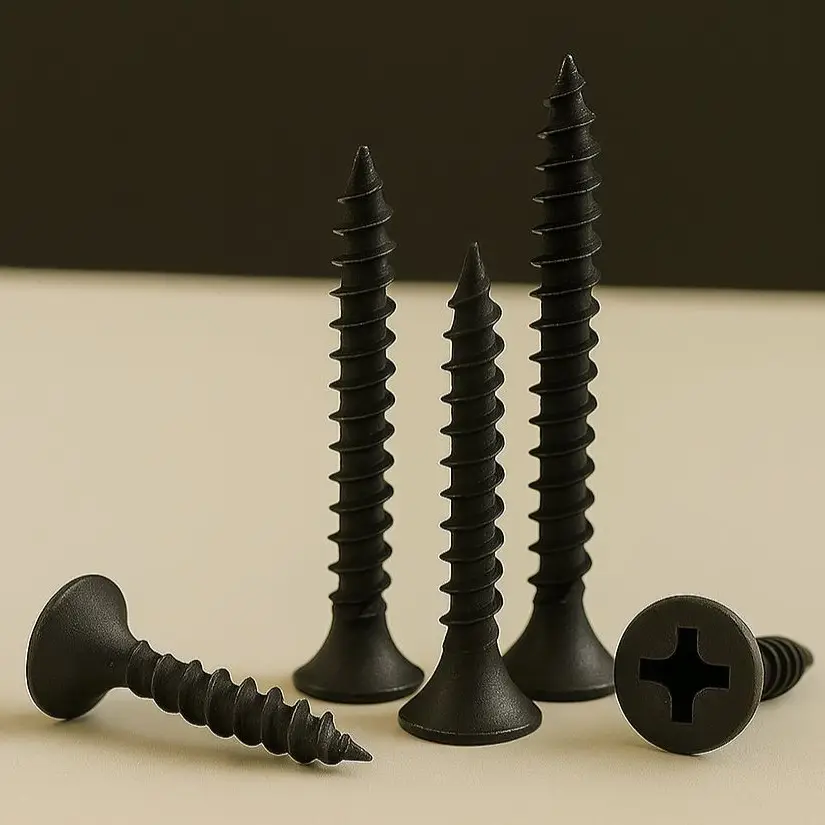
Chipboard screws commonly feature relatively deep, sharp threads designed to engage effectively with engineered wood.
The thread cuts into the material and creates mechanical interlock around the screw.
The objective is not simply to make the screw “grip harder.”
It is to create consistent engagement throughout the depth of the fastening.
This becomes particularly important when fastening boards that have lower density or a more variable internal structure.
2. Thread Pitch Influences Installation
Thread pitch refers to the distance between adjacent threads.
The pitch affects how quickly the screw advances through the material and how the threads interact with the board.
A suitable thread configuration can help provide:
- Efficient penetration
- Consistent advancement
- Reliable material engagement
- Controlled installation torque
The correct balance depends on the screw design and intended application.
3. Screw Diameter Matters
Thread geometry cannot be considered independently of screw diameter.
A larger-diameter screw generally creates a larger engagement area, while a smaller screw may be more suitable for applications where board thickness or component dimensions limit the available space.
Choosing the diameter therefore requires consideration of the complete application.
More metal does not automatically mean better fastening.
The screw must be appropriately matched to the material and load requirements.
4. The Screw Point Controls Initial Penetration
Before the threads can engage with the board, the screw point has to enter the material.
The point geometry influences how easily the screw starts and penetrates the chipboard.
A properly designed point can help reduce unnecessary installation resistance and support smoother driving.
This is especially important in high-volume manufacturing environments where hundreds or thousands of screws may be installed during production.
A small difference in point geometry can therefore have a significant impact on installation efficiency.
5. Head Design Is Part of the System
The thread isn’t the only important feature.
The screw head also determines how the fastener interacts with the surface of the board or the component being attached.
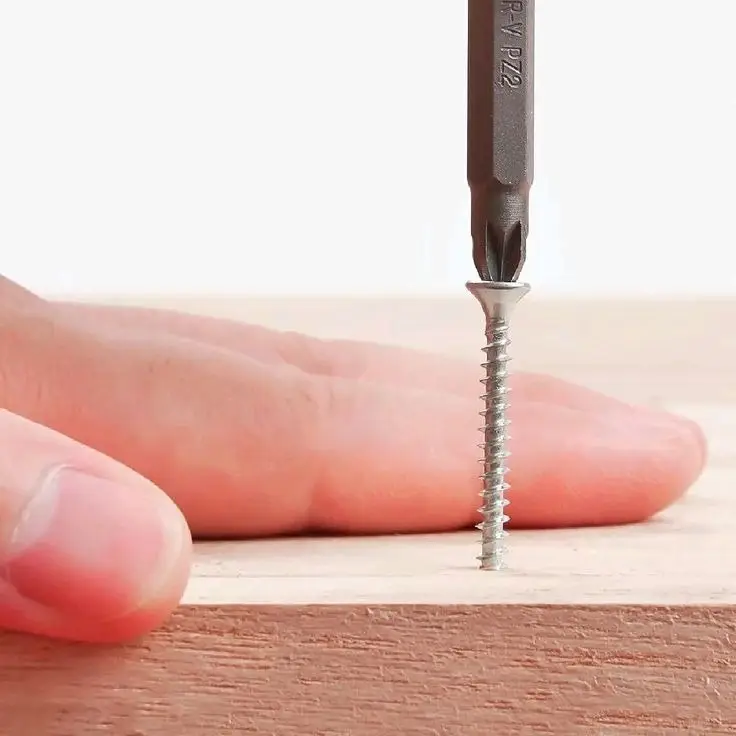
Chipboard screws are commonly available with countersunk-style heads so that the head can sit flush with the material when properly installed.
A well-designed head can contribute to:
- Clean surface finishing
- Proper seating
- Consistent installation
- Reduced interference with assembled components
The head, recess, shank, thread, and point must work together as one fastening system.
6. Drive Recess Affects Installation Performance
Even a well-designed thread can become difficult to use if the drive recess does not provide reliable bit engagement.
Common recess designs include Phillips and Pozidriv, as well as other drive configurations used for specific applications.
A consistent recess helps the driver transfer torque effectively into the screw.
Poor engagement can lead to:
- Bit slipping
- Recess damage
- Installation delays
- Increased rejection